
Addictive technology got here first




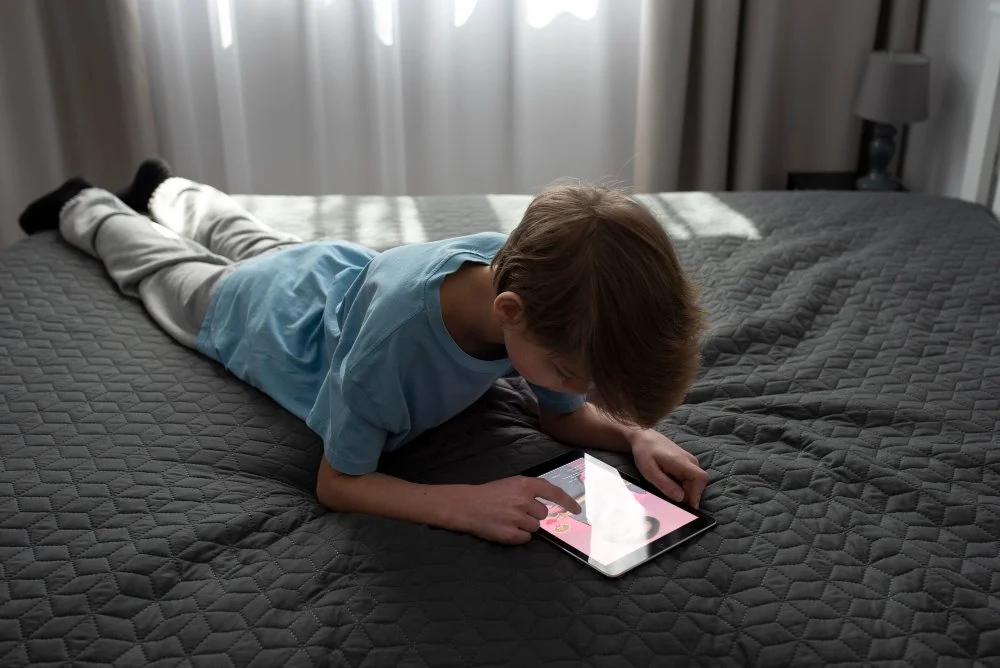



Now we have a gap
Dumb Phones
Calls & Texts Only
No smart features
Limited functions
Outdated experience
Not future ready
Today’s choices are either too outdated or too risky for children.

THE GAP
Smart Phones
Social media access
Endless notifications
Addictive by design
Overwhelming choice
Impact on health

Smartphones and social media can bring connection, but they can also expose children to endless scrolling, harmful content, cyberbullying, and sleep disruption. Families shouldn't have to choose between communication and unrestricted access.
Harmful content & pressure
Exposure to content and social dynamics many parents feel unprepared for.
Endless distraction
Feeds and notifications designed to hold attention far longer than intended.
Less time for real life
Screen time competing with the moments that shape development.
Sleep disruption
Late-night device use associated with poorer rest and recovery.
Statictics
According to latest research by leading national and international studies
80%
of Australian children aged 8–12 used social media or messaging services in 2024—approximately 1.3 million children.
Source: https://www.esafety.gov.au/research/children-and-social-media
+57%
Problematic social media use among adolescents increased from 7% in 2018 to 11% in 2022—a rise of approximately 57%.
Source: https://www.who.int/europe/news/item/25-09-2024-teens--screens-and-mental-health
>3hrs
Adolescents who spend more than three hours a day on social media face approximately twice the risk of poor mental-health outcomes.
11,876
A major longitudinal study found that increases in social media use predicted higher depressive symptoms one year later.
Source:https://jamanetwork.com/journals/jamanetworkopen/fullarticle/2834349/
95%
Up to 95% of teenagers now use social media, along with approximately 40% of children aged 8 to 12.
2-3x
Young people whose compulsive screen-use patterns increased over time experienced around 2 to 3 times the risk of suicidal thoughts or behaviours.
Source: https://www.washingtonpost.com/health/2025/12/28/adolescent-brain-development-screen-time/
Growing research shows increasing concerns about unrestricted access to social media, short-form videos, addictive infinite-scroll design, constant notifications and late-night smartphone use.

The evidence supports a clear principle
Children need connection
They do not need technology that capture and hold their attention